





What MERV measures
MERV stands for Minimum Efficiency Reporting Value. It is defined by ASHRAE Standard 52.2, which tests a filter against particles in three size ranges and reports the lowest efficiency the filter reaches in each range as it loads with dust.
The scale runs from 1 to 16. A higher number means the filter must capture a larger share of smaller particles. Braden manufactures filters from MERV 8 to MERV 16, and HEPA E12 and H13 above that.
| Rating | E10.3 to 1 micron | E21 to 3 microns | E33 to 10 microns | Braden families |
|---|---|---|---|---|
| MERV 8 | No minimum | No minimum | 70% | Minipleat Panels, Pleated Panels, Amaize Air |
| MERV 10 | No minimum | 50% | 85% | Minipleat Panels, Pleated Panels, Industrial Cartridges |
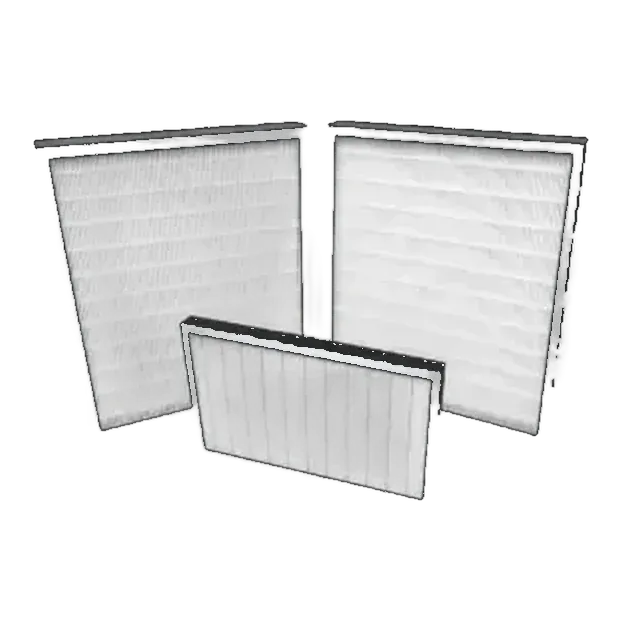
| MERV 11 | No minimum | 65% | 85% | Minipleat Panels, Pocket Filters, Pleated Panels, Industrial Cartridges, Amaize Air |
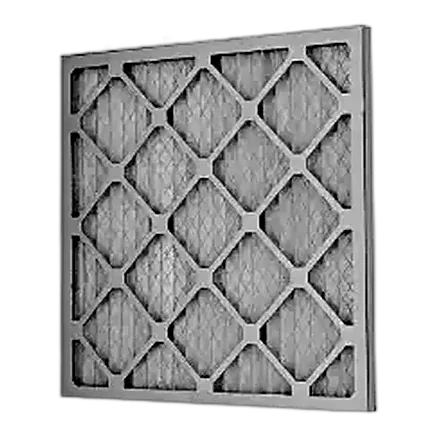
| MERV 13 | 50% | 85% | 90% | V-banks, Minipleat Panels, Pocket Filters, Pleated Panels, Amaize Air |
| MERV 14 | 75% | 90% | 95% | |
| MERV 15 | 85% | 90% | 95% | V-banks, Minipleat Panels, Industrial Cartridges, Gas Turbine Cartridges |
| MERV 16 | 95% | 95% | 95% | V-banks, Minipleat Panels, Industrial Cartridges, Gas Turbine Cartridges, Amaize Air |
The three particle size ranges
ASHRAE 52.2 groups particles into E1 (0.3 to 1 micron), E2 (1 to 3 microns), and E3 (3 to 10 microns). Coarse dust and pollen sit in E3. Fine particles that pass deep into equipment and lungs sit in E1.
Lower ratings only set minimums for the larger ranges. MERV 13 is the first rating that sets a minimum for E1, which is why it is a common target for commercial buildings and data halls.
What the A in MERV 13A means
A rating with an A suffix, such as MERV 13A, was tested using Appendix J of ASHRAE 52.2. The filter is conditioned before testing, so the rating shows its efficiency without any temporary electrostatic charge.
That matters because some media lose part of their charge in service. An A rating tells you the efficiency the filter holds once that charge is gone. Braden manufactures pleated panels rated MERV 11A and MERV 13A, and the Amaize Air line is rated MERV 8A through MERV 16A.
Choosing a rating
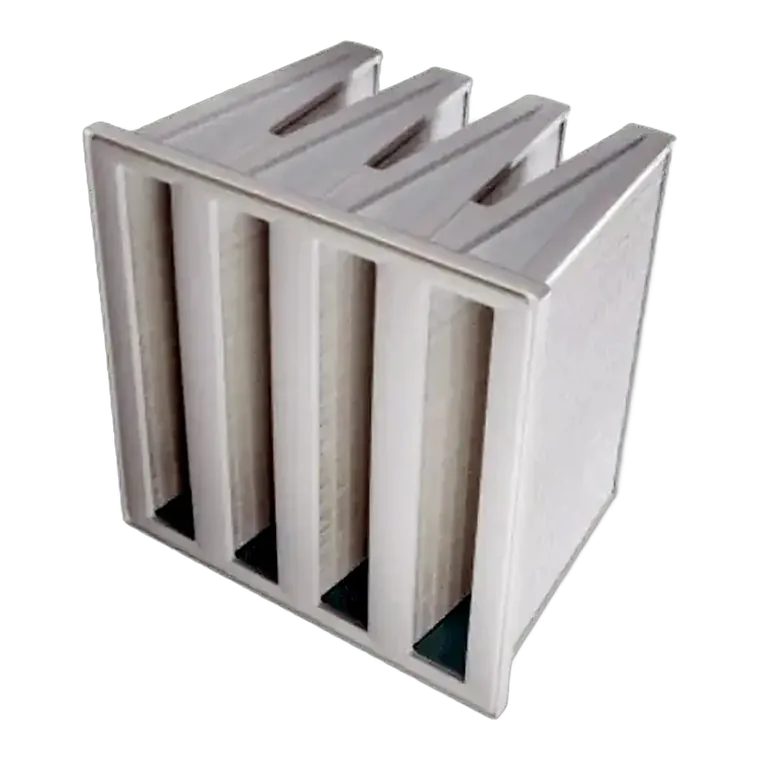
Match the rating to what the air has to protect and to what the air handler can push. A higher rating captures more fine particles, and the right filter design keeps resistance in check, which is why deep-pleat formats such as V-banks and minipleats are used at MERV 13 to 16.
A pre filter in front of the final filter takes out the coarse load first, so the high-efficiency filter behind it loads more slowly and lasts longer. If you are unsure which rating your system needs, a Braden specialist can match it to your current filter or your equipment specification.
Standards references: ASHRAE Standard 52.2 (MERV), EN 1822 (HEPA). Braden product ratings from Braden Filtration.